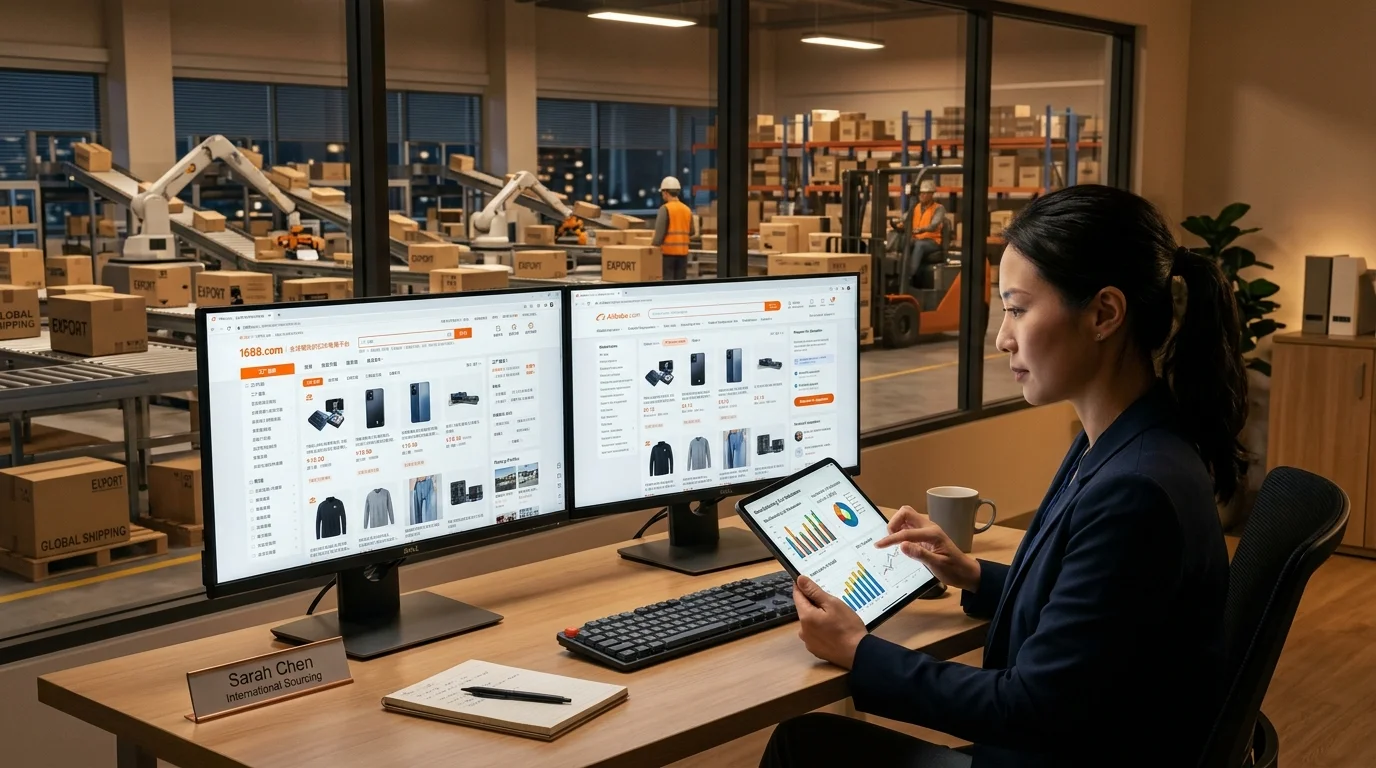
Groupage & LCL Imports to Peru: How to Ship Consolidated Cargo from 1 CBM with Qargo
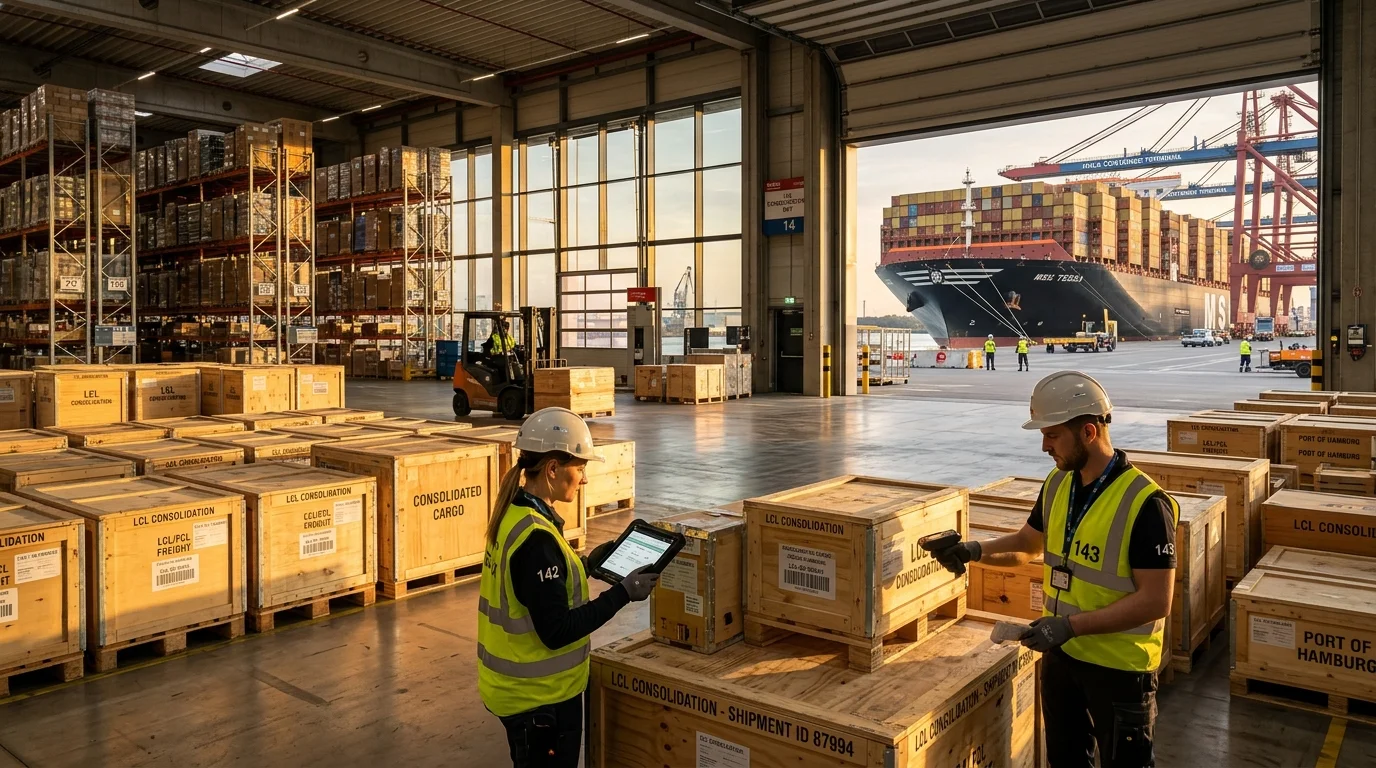
1. The Entrepreneur's Dilemma: The Barrier of Full Container Shipping
For decades, international commerce between Asia and Latin America was effectively restricted to massive industrial conglomerates capable of deploying $30,000 to $80,000 USD per purchase order to book full 20-foot (28 to 33 CBM) or 40-foot High Cube (68 to 76 CBM) shipping containers (FCL). For small and growing Peruvian businesses, the reality was severely constrained: either pay exorbitant air courier rates ($12 to $20 USD per kilogram via DHL or FedEx), or tie up limited operating cash in unmovable bulk inventory that took quarters to liquidate domestically.
In response to these challenges, commercial groupage and Less than Container Load (LCL) maritime consolidation have emerged as the primary growth vehicle for modern importers in Peru. However, substantial confusion exists between unregulated 'informal social media groupage schemes' and legitimate, legally compliant freight consolidation orchestrated by authorized freight forwarders and customs brokers like Qargo.
In this comprehensive guide exceeding 1,600 words, our maritime logistics and customs brokerage specialists dissect the operational engineering of LCL shipping: how to consolidate freight starting from just 1 cubic meter (CBM), protect legal ownership via independent customs declarations (DAM), calculate landed costs with total transparency, and leverage ocean groupage to validate commercial inventory in Peru with zero debt.
2. How Does LCL Consolidation Operate? The Weight vs Measurement (W/M) Formula
In maritime freight vocabulary, LCL stands for 'Less than Container Load'. Unlike FCL agreements where an importer contracts an entire container exclusively, LCL cargo involves sharing standardized shipping container space with other verified commercial shippers moving goods along the exact same maritime corridor to Port of Callao.
The universal pricing benchmark for ocean freight consolidation is the Cubic Meter (CBM) or Metric Ton (1,000 kg), evaluated under the international 'Weight or Measurement' (W/M) rule, whichever generates the greater value:
1) Maritime Equivalence Ratio: Ocean shipping standards establish that 1 CBM equals 1,000 kg (1 Ton). Consequently, if a shipment measures 2.5 CBM and weighs 600 kg, freight is assessed on the 2.5 CBM volumetric benchmark because volume exceeds physical mass.
2) Volumetric Measurement Formula: To calculate total volume: [Length in meters] x [Width in meters] x [Height in meters] x [Total quantity of cartons]. For instance, a batch of 20 cartons measuring 0.50m x 0.40m x 0.30m equals 0.06 CBM per box, resulting in exactly 1.20 CBM for the entire consignment.
3) Warehouse Stuffing and Unloading: Your factory in China delivers the packaged cartons to Qargo's consolidation hub in key industrial clusters such as Yiwu, Ningbo, Shenzhen, or Shanghai. Our origin specialists inspect carton integrity, verify dimensional accuracy with laser volumetric scanners, and issue a formal Warehouse Receipt. Once the container is optimized with compatible cargo, it is customs-sealed and transferred to the ocean berth for departure.

What is MOQ (Minimum Order Quantity) and the Ultimate Strategy to Overcome It?
Understand the economics behind the Minimum Order Quantity required by Asian manufacturing plants. Learn how Group Buying and container freight consolidation allow small businesses to source directly from factories without massive capital.
3. The Dangers of Informal 'Social Media Groupage' vs Formal Qargo Consolidation
Social media platforms have seen a surge in unregulated promoters marketing 'groupage clubs' promising to bring foreign goods by charging arbitrary fees per box or kilo without requesting business tax IDs or issuing invoices. Business owners must understand the severe legal liabilities involved:
A) Collective Seizure Risks: In unregulated groupage, the promoter uses a single intermediary Tax ID and blanket descriptions for the entire container. If just one of the 30 participants attempts to smuggle counterfeit branded goods (such as trademarked logos) or restricted items without mandatory sanitation permits, SUNAT customs immobilizes and forfeits the entire container. Shippers lose 100% of their investment with zero administrative recourse.
B) Forfeiture of Sales Tax Credit: Because your business Tax ID does not appear on the official Customs Declaration (DAM), you cannot claim the 18% VAT (IGV/IPM) paid as a tax credit against domestic sales, creating serious audit exposure with local tax authorities.
C) The Legitimate Qargo Master & House B/L Standard: Under Qargo's formal LCL framework, an individual House Bill of Lading is issued specifically to your company for each lot. Every importer undergoes independent customs clearance. If the container is selected for customs physical inspection (Red Channel), inspections are carried out on an itemized basis without compromising legitimate shipments.
4. Practical Economics of an LCL Consolidated Import
To understand why legitimate groupage is so financially competitive, consider the cost breakdown of a standard 3 CBM consignment valued at $3,000 USD FOB from Ningbo to Callao:
1. Ocean LCL Freight: Billed per CBM. With Qargo's transparent rates, ocean transit averages between $40 and $65 USD per CBM (totaling just $120 to $195 USD for 3 CBM, compared to upwards of $2,200 USD via air freight).
2. Cargo Marine Insurance: Comprehensive all-risk coverage from origin warehouse to destination, typically 0.50% to 0.75% of FOB value (approx. $22.50 USD).
3. Callao Deconsolidation & Terminal Fees: Upon vessel arrival, the container enters an authorized bonded depot for stripping. Local handling fees are assessed strictly on a pro-rata volume basis, eliminating fraudulent predatory charges.
4. Professional Customs Brokerage: Fixed agency fee for processing, classification, and securing legal green-channel release before SUNAT.
5. Customs Taxes & Perception: Assessed exclusively on your specific shipment's CIF value (0% duty under China-Peru FTA, 18% VAT, and 3.5% or 10% advance perception, all fully deductible).
Real Landed Cost Breakdown: China to Peru
Summary of all 10 expenses required to bring cargo from a Chinese factory to your warehouse in Peru.
| Concept / Fee | Entity / Provider | Estimated Range | Key Importer Note |
|---|---|---|---|
| 1. FOB Value (Goods) | Supplier / Factory in China | Factory price + inland transport to Chinese port | Commercial Invoice value negotiated with supplier. Customs taxable base. |
| 2. International Ocean Freight | Qargo (Freight Forwarder) | FCL: $1,200 - $2,800 / ctr | LCL: $35 - $65 / CBM | Port-to-port ocean transit (Ningbo/Shanghai ➔ Callao). |
| 3. International Cargo Insurance | Insurance Company / Qargo | 0.35% - 0.75% of FOB (Min. $25 - $45) | Protects against general average, container dampness or accidents. |
| 4. CIF Value (Customs Base) | SUNAT Valuation Reference | FOB + Freight + Insurance | The legal base upon which all import taxes are computed. |
| 5. Ad Valorem Tariff | SUNAT (Customs) | 0%, 6% or 11% of CIF (0% with China-Peru FTA) | Depends on HS Code. Form F certificate can yield 0%. |
| 6. IGV (16%) + IPM (2%) | SUNAT (Customs) | 18% over (CIF + Ad Valorem) | Tax credit (crédito fiscal) recoverable in your monthly declarations. |
| 7. SUNAT Perception | SUNAT (Customs) | 3.5% (Frequent importer) | 10% (1st import) | Advance payment of future sales tax; deductible against monthly VAT. |
| 8. Callao Port & Warehouse Fees | APM Terminals / DP World / Bonded Warehouse | $350 - $750 (Gate out, THC, traction, document release) | Local port handling; transparent and free of predatory markups with Qargo. |
| 9. Customs Broker (Agencia de Aduanas) | Qargo Customs Broker | 0.4% - 0.8% of CIF (Standard min. $120 - $180) | Mandatory legal dispatch for commercial shipments > US$ 2,000 FOB. |
| 10. Domestic Delivery | Qargo Local Transport | $100 - $350 (Lima Metropolitan area) | Trucking from Callao bonded warehouse to your door. |
Pro Tip: Never negotiate CIF with suppliers in China unless you have a written matrix of local destination fees in Callao. In 90% of cases, FOB gives you lower net costs and full control.
Which Incoterm should you choose with Chinese suppliers?
Free On Board (Port of China)
The supplier pays all export taxes and moves cargo onto the ship in China. You choose and pay the freight agent in Peru.
- 100% transparent Callao destination fees
- Full control over transit times and shipping line
Cost, Insurance & Freight
The supplier offers 'cheap' freight, but delegates the arrival to predatory port agents in Callao charging inflated handling fees.
- Risk of $500 to $2,000+ hidden destination charges
- Zero control over carrier or local release
Ex Works (Factory Floor)
You assume all expenses from the factory door in China to Peru, including Chinese export license, trucking, and customs.
- Requires own logistics team in China
- Lowest factory net price
5. Frequently Asked Questions Regarding Groupage & LCL Shipping to Peru
Preguntas Frecuentes sobre Importar de China a Perú
Respuestas clave para resolver dudas legales, tributarias y logísticas antes de embarcar tu mercadería.
You Might Also Be Interested In
Expand your knowledge with more international trade guides.
Exporting from Peru to Europe in 2026: Freight Costs, EUR.1 Certificate, Cadmium Limits & EU Customs Regulations
How to Export Coffee and Cacao Chocolates from Peru (2026): SENASA/DIGESA Permits, $2,000 vs $5,000 SUNAT Rule & Packaging