Advance vs Deferred Customs Clearance in Peru: How to Clear Cargo in 48 Hours with Zero Bonded Storage Fees
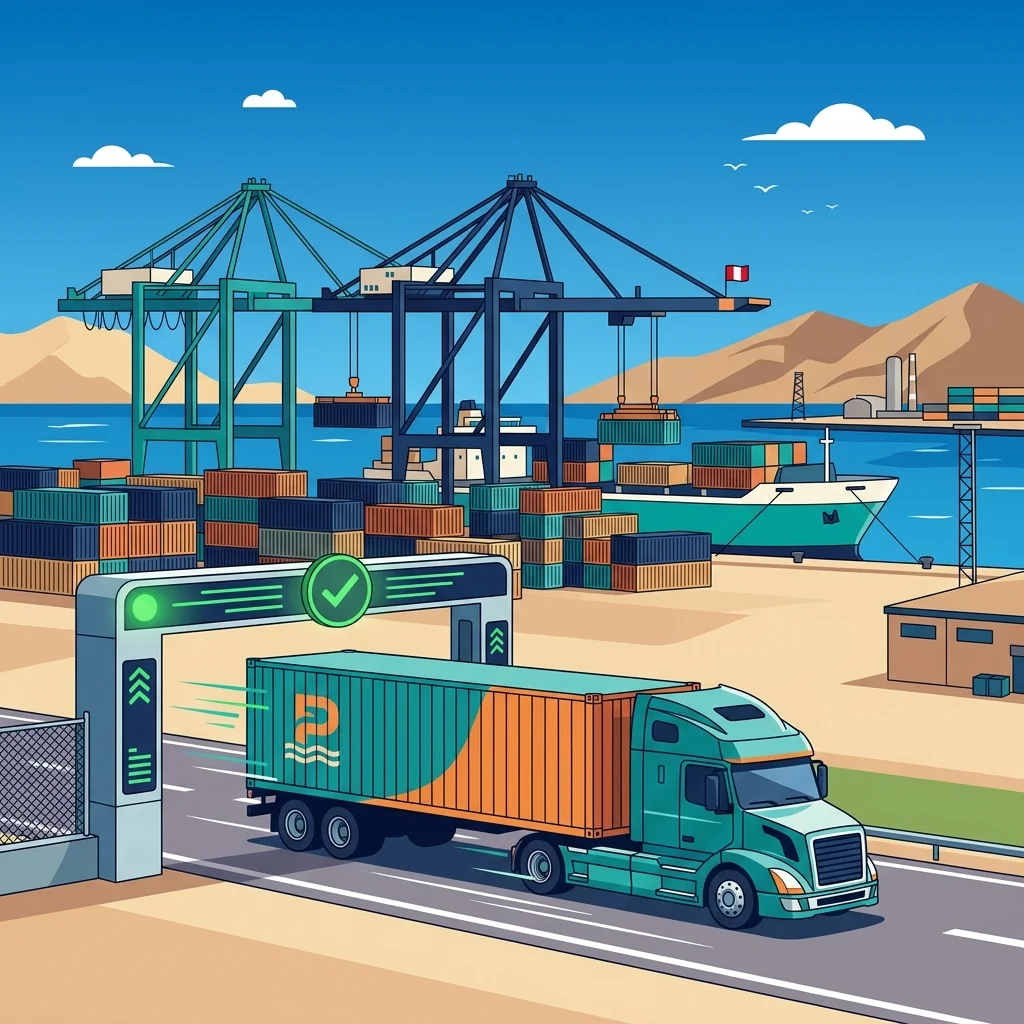
The Logistical Crossroad at Port of Callao: 48 Hours or 15 Days?
In international commerce, operational transit time is not merely a financial metric: it defines the commercial boundary between capturing market leadership with prompt inventory delivery or watching your profit margins evaporate in punitive bonded warehouse invoices at Port of Callao. For any corporation importing Full Container Loads (FCL) or Less than Container Load (LCL) consignments into Peru, the definitive operational crossroad occurs the precise moment the container vessel berths at DP World or APM Terminals. Will your shipping container discharge directly to your distribution center within 48 hours, or will it remain stranded for 7, 12, or 15 days accumulating compounding demurrage and storage penalties inside an off-dock bonded depot?
The definitive answer to this logistical dilemma lies in the customs clearance modality your business declares before SUNAT (Peru National Customs and Tax Administration). Peruvian foreign trade regulations establish two primary operational tracks for commercial import consumption: Advance Customs Clearance (Despacho Anticipado) and Deferred Customs Clearance (Despacho Diferido). Although Peruvian customs law (Legislative Decree No. 1053 and its decisive amendments under Legislative Decree No. 1492) established the statutory mandate of advance customs clearance for the vast majority of commercial import entries, thousands of importers continue to default out of habit to deferred clearance, needlessly surrendering between $500 and upwards of $1,800 per container to off-dock bonded depots.
In this comprehensive 1,500+ word strategic analysis, we dissect every operational, regulatory, and financial distinction between Advance and Deferred Customs Clearance at Callao maritime terminals and Jorge Chavez International Airport. You will master legal filing deadlines for the Customs Import Declaration (DAM), understand the automated customs channel inspection matrix (Green, Orange, and Red channels), audit essential pre-shipment documentation requirements, and implement the exact corporate blueprint to achieve direct dockside gate-out at zero bonded storage expense leveraging Qargo as your licensed customs brokerage partner.
1. What is Advance Customs Clearance and Why is It Mandatory in Peru?
Advance Customs Clearance (Despacho Anticipado) is an expedited statutory customs regime permitting commercial importers to initiate, process, and finalize import clearance protocols prior to the physical arrival of the carrying vessel or aircraft within Peruvian customs territory. In concrete operational terms, your dedicated customs broker audits product classifications, validates regulatory permits, transmits the digital Customs Import Declaration (DAM) to SUNAT, and electronically settles import taxes while your ocean container remains in transit across the Pacific ocean.
Peruvian Regulatory Architecture: To modernize national logistics infrastructure and compress average import dwell times from 15 days to under 48 hours, the Peruvian government enacted Legislative Decree No. 1492. This landmark statute declared Advance Customs Clearance MANDATORY for all definitive import consumption regimes, reserving deferred clearance solely for narrow statutory exceptions, such as: consignments with an FOB value under $2,000 USD, humanitarian relief shipments, emergency aid, diplomatic cargo, and specific temporary regimes.
When must the Advance Customs Declaration be filed? Peruvian customs regulations establish that an Advance DAM must be filed electronically up to thirty (30) calendar days prior to the estimated arrival date of the transport vessel, and strictly before the conclusion of vessel container discharge operations. If an importer fails to file the entry before discharge is completed, the shipment automatically falls into non-compliant Deferred Clearance status, triggering immediate administrative penalties and forfeiture of expedited terminal privileges.
2. The Trap of Deferred Customs Clearance: The Bonded Depot Profit Model
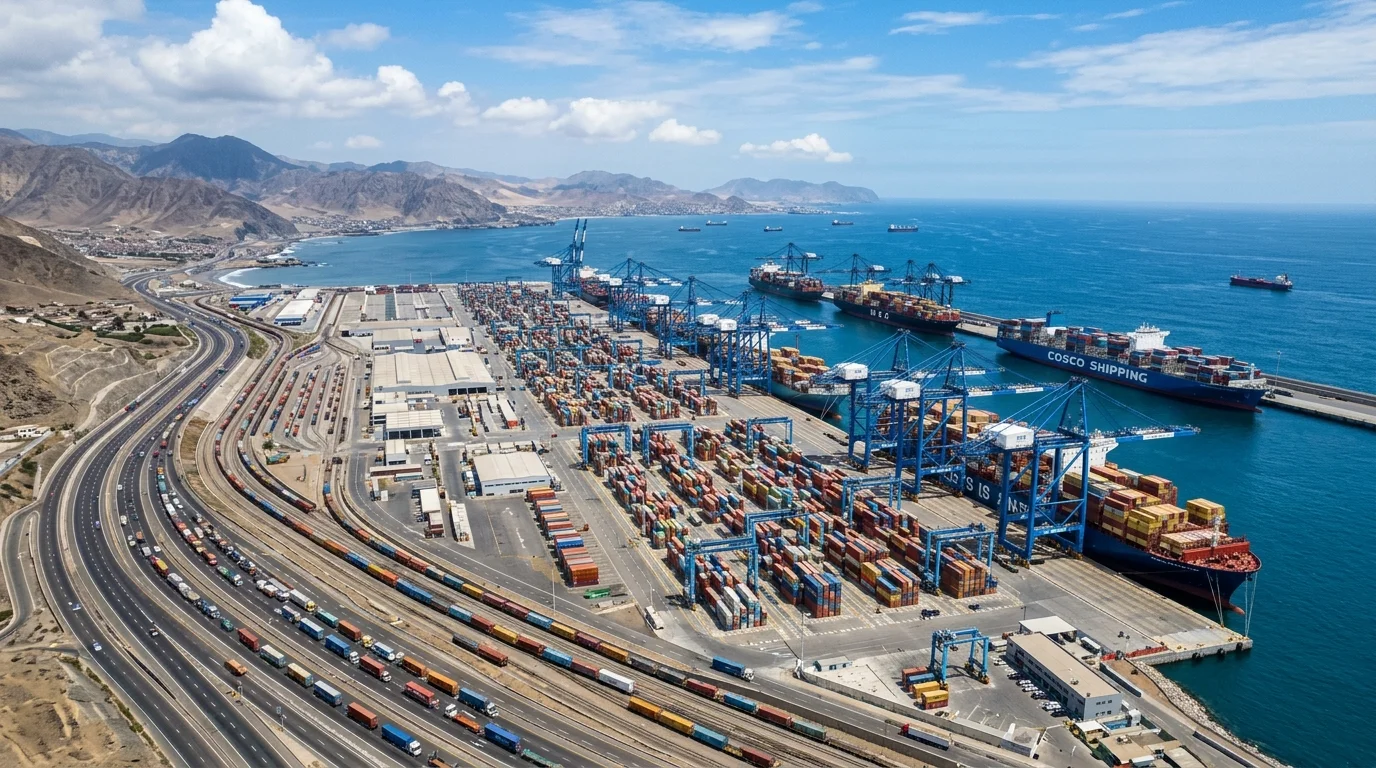
Chancay Port vs Port of Callao: Impact on Ocean Freight Rates and Transit Times in 2026
Strategic trade analysis 2026: how the Chancay Mega Port cuts China-Peru maritime transit to 23 days, its direct impact on container freight rates, competition with Callao, and supply chain optimization with Qargo.
Deferred Customs Clearance (Despacho Diferido), in sharp contrast, represents the legacy operational workflow where customs entry filing commences only AFTER cargo has physically arrived, discharged onto the marine terminal, and transferred into temporary storage. While historically the standard operating procedure in Peru, in modern international trade it represents severe operational inefficiency and fiscal waste.
The Predatory Trap of Deferred Processing: When a shipment arrives under deferred clearance parameters, Peruvian customs statutes legally prohibit direct delivery from the marine dockside terminal. Consignments are legally compelled to be trucked off-port to an authorized Off-Dock Bonded Depot (Depósito Temporal Extraportuario, such as facilities operated by Ransa, Neptunia, Tramarsa, or APM Inland Services).
This mandatory intermediate transfer unleashes an aggressive cascade of local terminal and handling charges: 1) Secondary drayage freight from marine terminal to off-dock depot ($150 to $250 USD); 2) Depot gate-in reception and handling surcharges ($100 to $180 USD); 3) Terminal tally and sorting fees ($80 USD); and 4) Punitive daily warehouse storage tariffs that activate after only 48 to 72 hours of dwell time. Consequently, while an unguided customs broker merely begins reviewing documentation with the vessel already departed, your container amasses $600 to $1,400 USD in wholly preventable local surcharges.
3. Direct Dockside Discharge: The Secret to Zero Bonded Storage Expenses
The preeminent financial advantage of Advance Customs Clearance is the statutory authority to designate the marine terminal itself as the Point of Arrival (Punto de Llegada: Terminal Portuario), unlocking Direct Dockside Discharge.
How Does Direct Discharge Function at DP World or APM Terminals Callao? When your integrated freight forwarder and customs broker (Qargo) pre-files your Advance DAM and assigns the marine dockside as the delivery point, your ocean container never transfers to an off-dock warehouse. Once the gantry crane lifts the box from the container vessel and stacks it in the terminal staging area, upon receiving automated Green Channel clearance from SUNAT, your commercial transport carrier enters the terminal security gate, mounts the container onto a chassis, and delivers directly to your facility in Lima or provinces.
The Balance Sheet Outcome: Off-dock bonded storage expenses equal precisely $0.00 USD. Your commercial merchandise arrives at your operational warehouse within 24 to 48 hours of vessel berthing, compressing total end-to-end supply chain transit times by over 70% compared to deferred processing.
4. The SUNAT Automated Inspection Channel Matrix (Green, Orange, Red)
Upon electronic submission of the Advance Customs Import Declaration (DAM), SUNAT automated risk-profiling neural networks assess commercial parameters and instantaneously assign one of three customs clearance channels:
1. Green Channel (Levante Automático - Instant Automated Release): The optimal commercial outcome. Requires zero document submission and zero physical cargo inspection. Once duties are settled electronically, SUNAT grants immediate legal release (Levante Autorizado). The container discharges directly from the marine dock to your facility.
2. Orange Channel (Revisión Documentaria - Documentary Examination): Customs mandates electronic transmission of commercial documentation (Commercial Invoice, Packing List, Bill of Lading, Certificate of Origin, and regulatory licenses). A specialized customs officer verifies that declared values and tariff classifications match documentary proof. Under Advance Clearance, this audit occurs BEFORE the vessel arrives in Callao. Consequently, the moment the ship berths, documentary approval is already secured and cargo release issues instantaneously.
3. Red Channel (Aforo Físico - Physical and Documentary Inspection): Customs orders an on-site physical inspection of container contents by an authorized customs inspector to verify physical quantities against the commercial declaration. Even under Red Channel designations, Advance Clearance delivers decisive speed advantages: physical inspections are scheduled on a high-priority basis directly within terminal inspection bays, bypassing weeks of depot bureaucratic backlogs.
5. Real-World Case Study: $1,130 USD Net Savings on a 40-Foot Container
To illustrate the balance sheet impact with audited precision, let us examine an authentic commercial shipment: a 40-foot High Cube (40HQ) marine container transporting $45,000 USD of commercial electronics from Shanghai to Port of Callao:
Scenario A: Deferred Clearance Workflow (Reactive, Unplanned Routing):
- International Ocean Freight: $2,800.00 USD.
- Mandatory drayage from marine dock to off-dock bonded depot: $220.00 USD.
- Depot gate-in, devanning, and terminal handling fees: $280.00 USD.
- Bonded storage fees (6 days of documentary clearance and physical inspection at $110/day): $660.00 USD.
- Internal terminal shunting and labor crew fees: $150.00 USD.
- Total destination handling and storage overhead: $1,310.00 USD.
- Total business dwell time from berthing to warehouse delivery: 11 business days.
Scenario B: Advance Customs Clearance with Qargo (Direct Dockside Release):
- International Ocean Freight: $2,800.00 USD.
6. Essential Pre-Shipment Document Requirements for Advance DAM Filing
- Advance DAM filed 5 days prior to vessel berthing with electronic pre-duty payment.
- Green Channel automated release granted by SUNAT algorithms.
- Direct gate-out from DP World / APM Terminals dockside: $0.00 USD in bonded depot storage.
- Standard pre-contracted terminal security and documentation fees: $180.00 USD.
- Total destination handling and storage overhead: $180.00 USD.
- Total business dwell time from berthing to warehouse delivery: 48 hours.
Strategic Conclusion: Accelerate Delivery and Cut Port Overhead with Qargo
Financial Summary: The business secured direct cash savings of $1,130.00 USD on a single container (an 86% net reduction in destination port overhead) while positioning commercial inventory for retail distribution nine full business days ahead of market competitors.
You Might Also Be Interested In
Expand your knowledge with more international trade guides.
Exporting from Peru to Europe in 2026: Freight Costs, EUR.1 Certificate, Cadmium Limits & EU Customs Regulations
How to Export Coffee and Cacao Chocolates from Peru (2026): SENASA/DIGESA Permits, $2,000 vs $5,000 SUNAT Rule & Packaging